

Sustainability · 2025
In this section50 topics
- Sustainability Policy3 items
- Sustainability Goals & UN SDGs3 items
- Policy Review2 items
- Business Value Chain1 item
- Stakeholder Analysis2 items
- Environmental Policy & Guidelines4 items
- Environmental Policy Review1 item
- Energy — Plan & Guidelines1 item
- Energy — Electricity Consumption1 item
- Energy — Fuel Consumption1 item
- Energy — Targets1 item
- Energy — Performance & Outcomes2 items
- Water — Plan & Guidelines1 item
- Water — Withdrawal, Discharge & Consumption1 item
- Water — Targets1 item
- Water — Performance & Outcomes2 items
- Waste — Plan & Guidelines1 item
- Waste — Generation, Disposal & Recycling1 item
- Waste — Targets1 item
- Waste — Performance & Outcomes2 items
- GHG — Plan & Guidelines2 items
- GHG — Emissions1 item
- GHG — Emissions Verification1 item
- GHG — Principles & Standards1 item
- GHG — Targets1 item
- GHG — Performance & Outcomes2 items
- Environmental Legal Incidents1 item
- Other Environmental Management1 item
- Social Sustainability — Overview1 item
- Social Policy & Guidelines3 items
- Social Policy Review1 item
- Social — Principles & Standards Practised1 item
- Human Rights Due Diligence1 item
- Employees — Plan & Guidelines3 items
- Employees — Workforce2 items
- Employees — Remuneration & Provident Fund2 items
- Employees — Training & Development2 items
- Employees — Occupational Health & Safety2 items
- Employees — Labour Relations2 items
- Employees — Employee Representation1 item
- Employees — Targets2 items
- Employees — Performance & Outcomes1 item
- Customers — Plan & Guidelines3 items
- Customers — Satisfaction Results1 item
- Customers — Targets2 items
- Customers — Performance & Outcomes2 items
- Community & Social — Plan & Guidelines3 items
- Community & Social — Targets1 item
- Community & Social — Performance & Outcomes1 item
- Law Violation Incidents1 item
Sustainability Policy
Has a Sustainability Policy
Yes
Policy Description
The Company has a policy to conduct business under the principles of ethics and good governance, ensuring transparency and accountability. It emphasizes fostering a corporate governance culture and being responsible to society, the environment, and stakeholders throughout the business value chain. Furthermore, it adheres to professional and business ethics in its operations, prioritizing support for educational development, promoting health and safety, and social development. The objective is to achieve sustainable business development and generate long-term returns for shareholders, while considering the impact of business operations on all parties involved with the Company.
Furthermore, the Company places importance on driving the economy, society, respecting human rights, the environment, and stakeholders throughout the business value chain, alongside developing business operations to grow with quality and sustainability. The Company has promoted and supported activities for communities and society, and has continuously emphasized environmental conservation and care to build good relationships with stakeholders.
The Company regularly reviews its policies related to sustainability management annually. Details are provided in the relevant policies as follows.
Policy Document Link
https://www.indigy.com/ir/sustainable-development/
Sustainability Goals & UN SDGs
Has Sustainability Goals
Yes
Goals Description
The Board of Directors shall oversee that the company's objectives and goals, as well as medium-term and/or annual strategies, are consistent with achieving the company's main objectives and goals, with appropriate and secure use of technology, as follows:
-
The Board of Directors shall oversee the formulation of annual strategies and plans that align with the company's main objectives and goals, and support the development or review of objectives, goals, and strategies for the medium term (3-5 years) as well, to ensure that annual strategies and plans consider longer-term impacts and are reasonably foreseeable.
-
In formulating strategies and annual plans, the Board of Directors shall ensure an analysis of the environment, various factors and risks that may affect relevant stakeholders throughout the value chain, as well as factors that may impact the achievement of the company's main objectives, with mechanisms to genuinely understand the needs of stakeholders.
-
The Board of Directors shall set goals appropriate to the business environment and the company's potential, while being aware of the risks of setting goals that could lead to illegal or unethical conduct.
-
The Board of Directors shall oversee the communication of objectives and goals through strategies and plans throughout the organization.
-
The Board of Directors shall oversee the allocation of resources and appropriate operational control, and monitor the implementation of strategies and annual plans.
UN Sustainable Development Goals
| SDG Goal |
|---|
| Goal 1 No Poverty |
| Goal 3 Good Health and Well-being |
| Goal 4 Quality Education |
| Goal 5 Gender Equality |
| Goal 6 Clean Water and Sanitation |
| Goal 9 Industry, Innovation and Infrastructure |
| Goal 10 Reduce Inequalities |
Policy Review
Policy Reviewed This Year
Yes
Policy Changed This Year
No
Business Value Chain
Value Chain Description
It comprises 6 elements, as illustrated in the diagram below, which are interconnected within the company's overall business operations. The approaches to managing the value chain for these 6 business activities are as follows:
Stakeholder Analysis
Introduction
1. Product and Service Selection
Selecting and procuring software products from leading global companies for developing various systems for clients. These products are reliable, internationally recognized, and secure for the client's organization. The company also collaborates with partners to enhance service delivery to clients, utilizing personnel with over 20 years of experience in software development to ensure maximum customer satisfaction and to meet customer requirements according to schedule.
2. Project Management
The company provides comprehensive software development services, from consulting and gathering customer requirements to developing and designing solutions that meet customer needs. For clients seeking to develop systems for their organizations, efficient project management utilizing personnel appropriate for each project ensures high-quality deliverables that are completed within the customer's timeline, thereby fulfilling customer requirements.
3. Testing and Quality Control
Controlling the quality of products and services under ISO 9001:2015 standards and testing under ISO/IEC 27001:2022 standards. Random quality checks of software are conducted before deployment to customer systems to maintain product and service standards, including security, for customer satisfaction.
4. Sales and Marketing Planning
As technology businesses tend to change rapidly, the company consistently conducts studies to identify business opportunities for software development businesses and various technological aids. This is to create business returns in line with the sustainability policy for all relevant stakeholders and to ensure efficient and rapid processes in responding to customer needs and expectations.
5. Product and Service Delivery
Ready to provide fast, prompt, and efficient service, capable of delivering products and services quickly according to schedule, while considering the service and security of customer systems. This also includes providing knowledge on the use of organizational software to both employees and customers.
6. After-Sales Service
Each project is staffed with dedicated personnel capable of resolving issues quickly and efficiently. This includes monitoring and evaluating customer satisfaction, actively listening to customer feedback and suggestions in accordance with international standards adopted by the company, and providing channels for receiving customer complaints and suggestions rapidly and effectively.
Stakeholder Analysis
| Stakeholder Type | Stakeholders | Stakeholder Expectations | Response to Expectations | Communication Activities |
|---|---|---|---|---|
| External stakeholders | 2904 · Description: Investors or investment institutions · 2905 · Description: Analysts · 2913 · Description: Shareholders | Good returns, Ability to control production and costs according to targets, Has a quality risk management system, Good corporate governance, The business is stable and continuously growing, Company information received is accurate, complete, timely, and transparent, Has a good monitoring and control system | - Govern the business transparently, fairly, and verifiably. - Pay appropriate dividends. - Disclose information transparently. - Optimize internal processes for maximum efficiency. - Develop business strategic plans. - Manage risks prudently. - Manage processes using the ISO9001:2015 system. | 2938 · Description: Visit · 2939 · Description: Press Release · 2941 · Description: Online Communication · 2944 · Description: Annual General Meeting (AGM) · 2945 · Description: Complaint Reception |
| External stakeholders | 2923 · Description: Customers | - The software is of high quality and secure for the organization, and good and accurate services are received. - The price of products/services is appropriate. - Price competition is transparent. - High-quality products and services meeting international standards are received. - Products and services come with a warranty. - Problems that arise can be resolved as quickly as possible. - Customer data confidentiality is maintained. | Operate according to good corporate governance policies. Provide prompt after-sales service capable of timely problem resolution. Govern the business transparently, fairly, and accountably. Maintain an anti-corruption policy. Manage quality with the ISO9001:2015 system. Adhere to an ethical code for maintaining customer data confidentiality. Develop service quality and meet customer needs. Comply with policies for receiving complaints and reporting corrupt practices. | 2941 · Description: Online Communication · 2943 · Description: External Meeting · 2945 · Description: Complaint Reception · 2947 · Description: Satisfaction Survey |
| External stakeholders | 2899 · Description: Suppliers | Compliance with company regulations and requirements regarding procurement Conducting business transparently, fairly, and equally Maintaining the confidentiality of partner information | Enhance the efficiency of procurement processes. Maintain the confidentiality of partner information. Adhere faithfully to contracts, agreements, and commercial terms. Establish clear and fair procurement policies. | 2941 · Description: Online Communication · 2943 · Description: External Meeting · 2945 · Description: Complaint Reception · 2947 · Description: Satisfaction Survey |
| Internal stakeholders | 2921 · Description: Employees · 2936 · Other name: Employee · Description: Others | - Competitive remuneration, opportunities for career and company advancement, and job security. - A suitable working environment and facilities, with adequate and ready-to-use operational equipment, including occupational health and safety. - Appropriate welfare benefits commensurate with the cost of living in the local area and surrounding communities. | Develop a Succession Plan to outline career growth for key positions. Promote continuous skill and knowledge development among employees in accordance with the personnel development plan. Establish guidelines and practices for occupational safety and health in operations, and promote the well-being of employees. | 2941 · Description: Online Communication · 2942 · Description: Internal Meeting · 2945 · Description: Complaint Reception · 2946 · Description: Employee Engagement Survey · 2948 · Description: Training / Seminar |
| External stakeholders | 2902 · Description: Community · 2928 · Description: Society | - Reduce environmental impact on surrounding communities- Participate in community development, create jobs and income to build stability for people in surrounding communities | Adhere to sustainable growth policies, considering the surrounding communities and society, for the company's sustainable growth. Increase efficiency in resource utilization and reduce the impact of greenhouse gas emissions. Establish a technology learning center for students and interested individuals. | 2939 · Description: Press Release · 2940 · Description: Social Event · 2941 · Description: Online Communication · 2945 · Description: Complaint Reception |
Environmental Policy & Guidelines
Has an Environmental Policy
Yes
Policy Description
The company prioritizes quality, safety standards, and environmental stewardship, adhering to the United Nations' Sustainable Development Goals (SDGs). It is committed to mitigating environmental impacts across various aspects, including energy consumption, water usage, renewable resource utilization, the discharge and management of waste generated from business operations, and greenhouse gas emissions arising from construction processes. This commitment aligns with government policies and international environmental agreements concerning climate change. Furthermore, the company supports the nation's appropriate greenhouse gas reduction initiatives and contributes to the country's efforts to reduce greenhouse gases in response to climate change. Thailand has formally declared its intention to reduce greenhouse gases to the State Parties of the United Nations Framework Convention on Climate Change. These principles are embedded within the company's good corporate governance policy and social responsibility policy.
Policy Document Link
https://www.indigy.com/ir/sustainable-development/
Environmental Guidelines
| Guideline |
|---|
| Electricity Management |
| Renewable/Clean Energy Management |
| Water Management |
| Waste Management |
| Greenhouse Gas and Climate Change Management |
| Air Quality Management |
Environmental Policy Review
Policy Reviewed This Year
No
Energy — Plan & Guidelines
Has an Energy Management Plan
No
Energy — Electricity Consumption
Electricity Consumption
| Metric | Current Year | Previous Year | Two Years Ago |
|---|---|---|---|
| Total electricity consumption within the organization (Kilowatt-Hours) | 0 | 0 | 0 |
| Electricity purchased for consumption from non-renewable energy sources (Kilowatt-Hours) | 0 | 0 | 0 |
| Electricity purchased or generated for consumption from renewable energy sources (Kilowatt-Hours) | 0 | 0 | 0 |
Energy — Fuel Consumption
Fuel Consumption
| Metric |
|---|
| Crude oil (Barrels) |
| Coal (Metric tonnes) |
| Jet fuel (Litres) |
| Diesel (Litres) |
| Gasoline (Litres) |
| Fuel oil (Litres) |
| Natural gas (Standard cubic feet) |
| LPG (Kilograms) |
| Steam (Metric tonnes) |
Energy — Targets
Has Set Targets
No
Energy — Performance & Outcomes
Has Performance Results
Yes
Performance Description
As the company operates a software design and development business, which primarily relies on computers for its operations, electricity consumption is unavoidable. However, since computer equipment consists of small electrical appliances, the company's computer usage consequently results in a relatively low electricity consumption rate.
Additionally, the company is committed to reducing electricity consumption, which is the primary energy source in its office buildings, by implementing office electricity reduction policies, such as turning off lights, switching off air conditioners during lunch breaks, and setting specific times for turning off electrical appliances after working hours and during holidays. Furthermore, the company fosters awareness within the organization by encouraging employees to unplug unused electrical appliances to reduce electricity consumption, which also contributes to mitigating global warming.
In 2025, the company's electricity consumption amounted to 270,177.60 Baht. This represents an increase of 103,667.84 Baht from the previous year, due to the expansion of leased office space to accommodate business growth.
Water — Plan & Guidelines
Has a Water Management Plan
No
Water — Withdrawal, Discharge & Consumption
Water Withdrawal, Discharge & Consumption
| Metric | Current Year | Previous Year | Two Years Ago |
|---|---|---|---|
| Total water withdrawal (Cubic meters) | |||
| Total water withdrawal by third-party water (Cubic meters) | |||
| Total water withdrawal by surface water (Cubic meters) | |||
| Total water withdrawal by groundwater (Cubic meters) | |||
| Total water withdrawal by seawater (Cubic meters) | |||
| Total water withdrawal by produced water (Cubic meters) | |||
| Percentage of wastewater treated before discharge (%) | |||
| Total water discharge (Cubic meters) | |||
| Total water discharge to third-party water (Cubic meters) | |||
| Total water discharge to surface water (Cubic meters) | |||
| Total water discharge to groundwater (Cubic meters) | |||
| Total water discharge to seawater (Cubic meters) | |||
| Total water consumption (Cubic meters) | 0 | 0 | 0 |
| Recycled water (Cubic meters) | 0 | 0 | 0 |
Water — Targets
Has Set Targets
No
Water — Performance & Outcomes
Has Performance Results
Yes
Performance Description
The company is committed to reducing wasteful water consumption and aims for optimal water utilization by instilling awareness among employees and posting water-saving campaign signs at water dispensing points.
In 2025, the company leases office space from a third party. The office rental fee is inclusive of water and other expenses, thus, it is not possible to compare changes for this year.
Waste — Plan & Guidelines
Has a Waste Management Plan
No
Waste — Generation, Disposal & Recycling
Waste Generation, Disposal & Recycling
| Metric |
|---|
| Total waste generated (Kilograms) |
| Non-hazardous waste (Kilograms) |
| Non-hazardous waste - Landfilling (Kilograms) |
| Non-hazardous waste - Incineration (with energy recovery) (Kilograms) |
| Non-hazardous waste - Incineration (without energy recovery) (Kilograms) |
| Non-hazardous waste - Other disposal operations (Kilograms) |
| Hazardous waste (Kilograms) |
| Hazardous waste - Landfilling (Kilograms) |
| Hazardous waste - Incineration (with energy recovery) (Kilograms) |
| Hazardous waste - Incineration (without energy recovery) (Kilograms) |
| Hazardous waste - Other disposal operations (Kilograms) |
| Total reused/recycled waste (Kilograms) |
| Reused/Recycled non-hazardous waste (Kilograms) |
| Reused non-hazardous waste (Kilograms) |
| Recycled non-hazardous waste (Kilograms) |
| Reused/Recycled hazardous waste (Kilograms) |
| Reused hazardous waste (Kilograms) |
| Recycled hazardous waste (Kilograms) |
Waste — Targets
Has Set Targets
No
Waste — Performance & Outcomes
Has Performance Results
No
Performance Description
Given that the company operates in the technology sector, it is committed to reducing waste generation by minimizing the use of paper documents and emphasizing the adoption of e-documents. Furthermore, awareness of plastic reduction is fostered among employees through initiatives such as encouraging the use of cloth bags and personal water bottles to mitigate plastic waste from both plastic bags and plastic/paper cups.
GHG — Plan & Guidelines
Has a GHG Management Plan
No
Plan Description
GHG — Emissions
GHG Emissions
| Metric |
|---|
| Total GHG emissions (Metric tonnes of carbon dioxide equivalent) |
| Total greenhouse gas emissions 1 (Metric tonnes of carbon dioxide equivalent) |
| Total greenhouse gas emissions 2 (Metric tonnes of carbon dioxide equivalent) |
| Total greenhouse gas emissions 3 (Metric tonnes of carbon dioxide equivalent) |
GHG — Emissions Verification
Emissions Verified by a Third Party
No
GHG — Principles & Standards
Principles & Standards Applied
| Standard |
|---|
| 2671 |
GHG — Targets
Has Set GHG Targets
No
GHG — Performance & Outcomes
Has Performance Results
Yes
Performance Description
The Thailand Greenhouse Gas Management Organization (Public Organization), whose Board of Directors has appointed a working group to study and conduct initial calculations of greenhouse gas emissions from the company's normal operations, such as electricity consumption, fuel consumption, water consumption, and paper usage, etc., for monitoring the company's greenhouse gas reduction performance. The working group has studied data to establish a framework and guidelines for sustainable greenhouse gas reduction, enabling the company and its employees to participate in taking responsibility for greenhouse gas emissions. For instance, in addition to increasing resource efficiency through economical and valuable use, the company has also studied and developed practical guidelines that can sustainably reduce greenhouse gas emissions and are appropriate for its operations, in accordance with the Organizational Carbon Footprint Manual, which was developed by.
-
Measuring, recording, and reporting significant greenhouse gas emissions using accepted standards and operating according to the principles of methodologies defined by international bodies.
-
Implementing appropriate measures to reduce and mitigate both direct and indirect greenhouse gas emissions.
-
Preventing or reducing greenhouse gas emissions from various equipment.
-
Energy conservation in all areas and developing products and services that utilize energy efficiently.
-
Considering the goal of achieving carbon balance by implementing greenhouse gas offset measures. This involves minimizing emissions and then offsetting the remaining emissions through balanced absorption or removal of gases from the atmosphere to limit global warming. The primary objective is to reduce global temperature to a safe level and create environmental sustainability.
-
Considering various risks and integrating climate change adaptation into the organization's decision-making process.
-
Identifying the sources of cumulative direct and indirect greenhouse gas emissions to define the scope of the organization's responsibility.
Environmental Legal Incidents
Legal Violation Incidents
| Metric | Current Year | Previous Year | Two Years Ago |
|---|---|---|---|
| Number of cases or incidents of legal violations or negative environmental impact (cases) | 0 | 0 | 0 |
Other Environmental Management
Plan Description
The company's Work From Home (WFH) policy, under the ESG framework, aims to support sustainable business operations. In terms of Environment (E), it seeks to reduce greenhouse gas emissions from commuting and decrease office resource consumption through the use of digital documents. In terms of Social (S), it aims to promote work-life balance for employees, reduce stress, enhance quality of life, and support equal access to work opportunities. Regarding Governance (G), it focuses on establishing clear and transparent performance indicators, utilizing auditable work tracking systems, and ensuring data security. This policy covers employees who are able to work from home, subject to approval from their supervisors. The policy will be regularly monitored, evaluated, and reviewed to align with the organization's ESG objectives.
Social Sustainability — Overview
Operating Results — Introduction
The company prioritizes all aspects of social responsibility, particularly the potential environmental impacts of its business operations, and instills a strong sense of awareness in its employees to value and collectively care for the environment both within and outside the organization.
Social Activities (Corporate Social Responsibility)
Indigy Public Company Limited
Project “Donate Blood, Save Lives” “Join us in donating blood to save human lives”
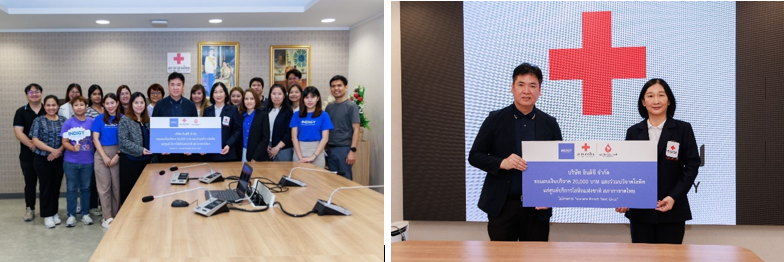
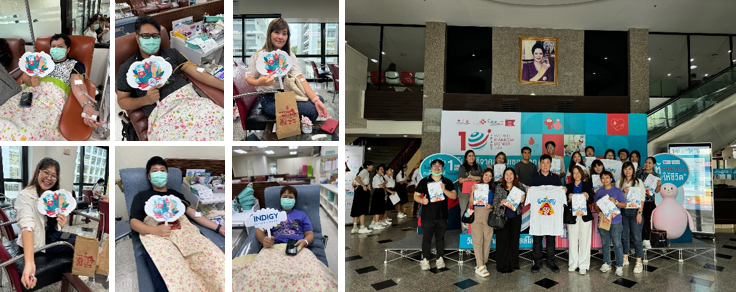
On September 20, 2024, Indigy Company Limited, led by Mr. Withan Chuajarernsiri, Chief Executive Officer, along with the management team and employees, jointly donated funds to assist flood victims through the Relief and Public Health Bureau of the Thai Red Cross Society. Additionally, they participated in blood donation to save human lives, promoting altruism and instilling a sense of self-responsibility and social responsibility in helping others among the company's employees.
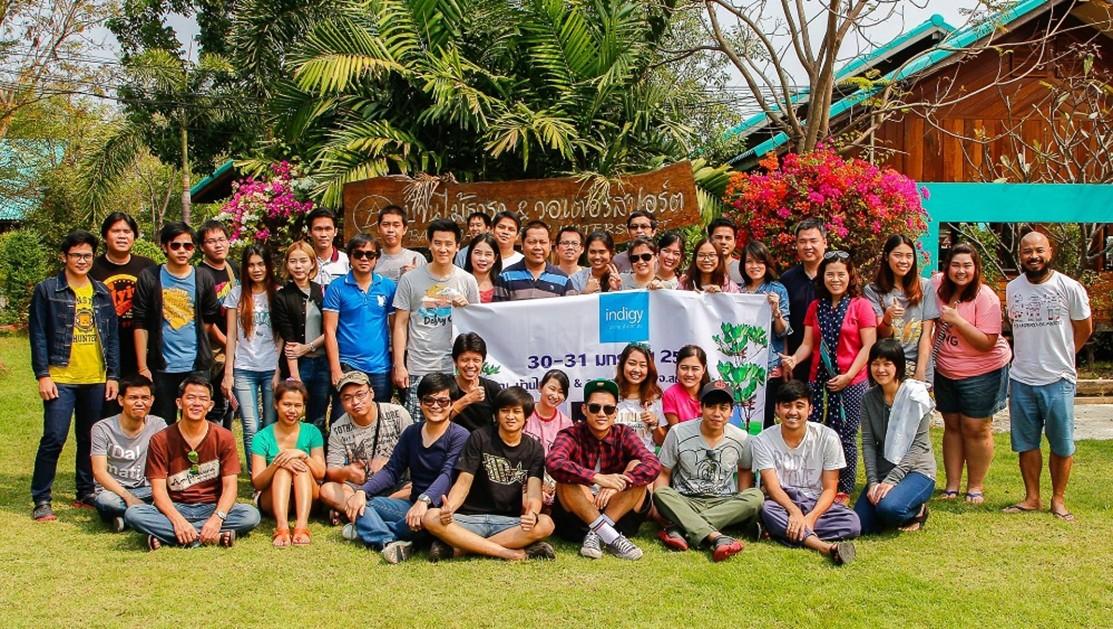
Indigy Mangrove Reforestation Activity
At the mangrove forest area, Samut Sakhon Province
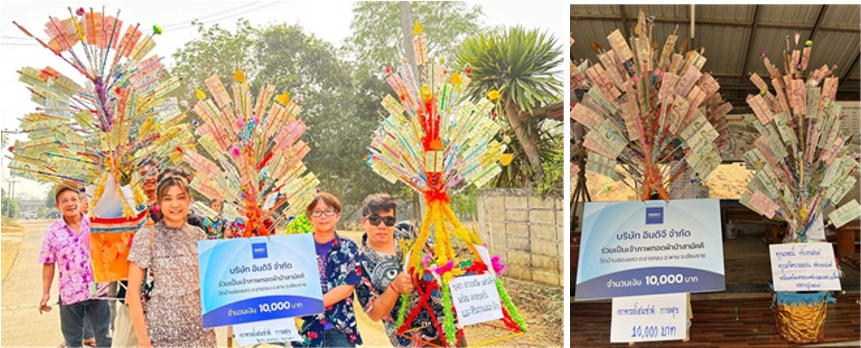
Participate in the Thod Pha Pa Samakkee (Unity Robe Offering) ceremony
At Wat Ban Song Kwae, Tharn Thong Subdistrict, Phan District, Chiang Rai Province
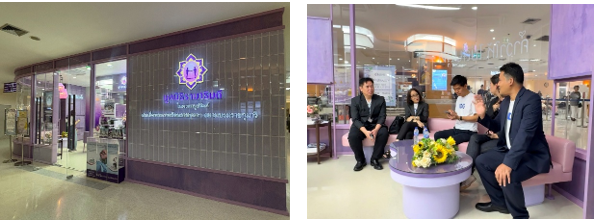
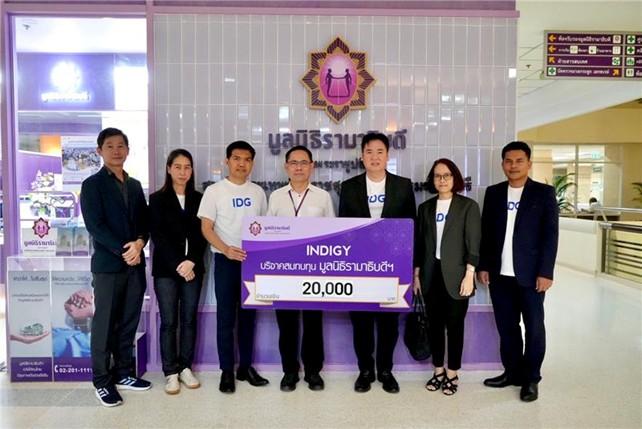
On November 26, 2025, Indigy Public Company Limited shared its success back with society by donating financial support to the Ramathibodi Foundation to enhance medical capabilities, healthcare, and innovations that sustainably improve patients' quality of life.
We believe that innovation enables organizational growth, but it is the human heart that allows society to grow together. This is another small step of positive impact that we wish to convey from the world of technology... to the real world.
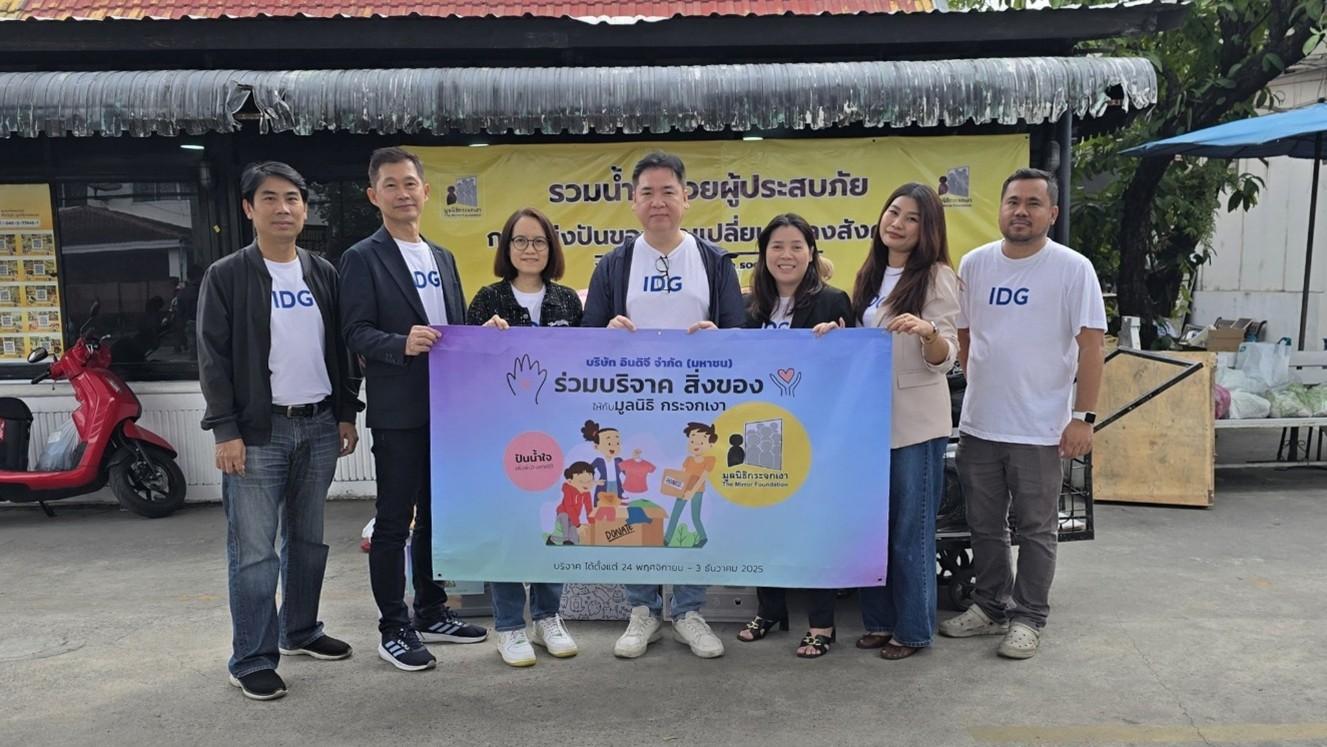
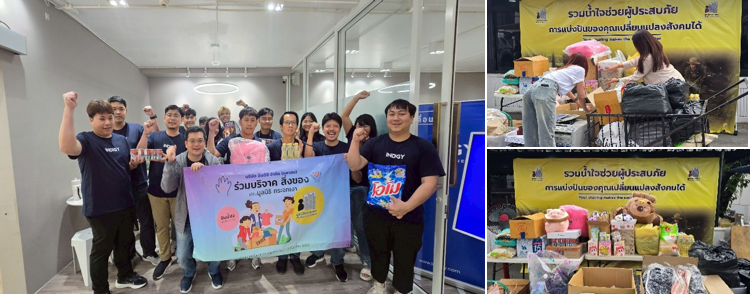
On December 12, 2025, Indigy Public Company Limited joined in donating items to the Mirror Foundation, believing that the growth of business and technology should go hand in hand with social and environmental responsibility. This act of sharing is not merely assistance, but also an extension of opportunities, fostering collaborative power, and collectively driving society forward sustainably.
In an era where technology plays a crucial role in change, INDIGY is committed to developing innovations under the ESG concept to create shared value for people, communities, and society in the long term. This is because we believe that true progress is not measured solely by business results, but by meaningful collective growth.
Employees — Plan & Guidelines
Has an Employee Management Plan
Yes
Plan Description
Fair Treatment of Labor
The company is committed to treating all employees equally and fairly, without discrimination based on gender, age, or other factors. We are dedicated to developing the potential of our employees, as well as providing appropriate compensation and benefits. The company believes that employee welfare is a fundamental basis for sustainable organizational development and a crucial factor contributing to the long-term success of the organization.
Employment
The company has a fair and transparent employment policy, providing equal access to job opportunities for everyone. Statistical data shows that the company values diversity in the workplace, encompassing gender (gender-neutral) and age ranges, to create a working environment that fosters creativity and innovation from diverse perspectives.
Personnel Development
The company continuously prioritizes the development of its employees' potential. Therefore, it allocates budgets and designs diverse training programs to enhance the skills and expertise of employees at all levels. This investment in employee development reflects the company's vision, which focuses on sustainable growth, believing that highly capable employees are the key to driving the organization towards success.
Employee Safety, Occupational Health, and Working Environment
The company places the highest importance on the safety, occupational health, and working environment of all employees. Regular safety training is provided. In 2025, the company conducted an average of 3 hours of safety training per employee. We are committed to fostering a culture of safety within the organization through knowledge dissemination, training, and raising safety awareness among employees at all levels to prevent accidents and work-related illnesses.
Plan Areas
| Plan Area |
|---|
| Fair employee compensation |
| Employee training and development |
| Promoting employee relations and participation |
| Occupational health and safety in workplace |
Employees — Workforce
Employees with Disabilities — Introduction
The Company recognizes the importance of equality and the participation of all individuals in society, including supporting the employment of persons with disabilities to ensure they have appropriate and fair access to work opportunities.
According to the Persons with Disabilities' Quality of Life Promotion and Development Act B.E. 2550 (2007) and its amendments, employers or establishments with 100 or more employees are required to employ persons with disabilities at a legally prescribed ratio or implement alternative measures, such as contributing funds to the Persons with Disabilities' Quality of Life Promotion and Development Fund.
However, the Company has fewer than 100 employees in total and is therefore not subject to the aforementioned law. Nevertheless, the Company continues to prioritize supporting and promoting employment opportunities for persons with disabilities as appropriate, considering the nature of the work, their abilities, and the organization's readiness.
The Company has the following operational guidelines:
-
Promote equality in recruitment without discrimination.
-
Consider offering opportunities for qualified persons with disabilities to join the Company.
-
Adjusting the working environment to be suitable for all employee groups (if necessary).
-
Support raising awareness about diversity and inclusion within the organization.
The Company is committed to being a part of supporting an inclusive society that leaves no one behind.
Workforce Data
| Metric | Current Year | Previous Year | Two Years Ago |
|---|---|---|---|
| Total number of employees (Persons) | 97 | 97 | 96 |
| Number of male employees (Persons) | 52 | 50 | 59 |
| Number of female employees (Persons) | 45 | 47 | 37 |
| Total employment of disabled persons (people) | 0 | 0 | 0 |
| Total disabled employees (people) | 0 | 0 | 0 |
| Total male disabled employees (people) | 0 | 0 | 0 |
| Total female disabled employees (people) | 0 | 0 | 0 |
| Total disabled workers who are non-employee (people) | 0 | 0 | 0 |
| Contributions to the fund for promoting and improving the quality of life for disabled persons | 0 | 0 | 0 |
| Total number of male employees in operational level (Persons) | 46 | 44 | 53 |
| Total number of male employees in management level (Persons) | 5 | 5 | 5 |
| Total number of male employees in executive level (Persons) | 1 | 1 | 1 |
| Total number of female employees in operational level (Persons) | 35 | 36 | 28 |
| Total number of female employees in management level (Persons) | 6 | 7 | 6 |
| Total number of female employees in executive level (Persons) | 4 | 4 | 3 |
Employees — Remuneration & Provident Fund
Introduction
The company has a policy of fair and competitive compensation in the labor market, determined based on the knowledge, skills, experience, and performance of each employee. During 2023 – 2025, the company continuously adjusted compensation upwards to align with economic conditions and the company's growth.
Monetary compensation
Total compensation for the company's employees (excluding executives) in 2023 - 2025 amounted to 62.39 million baht, 61.03 million baht, and 63.52 million baht, respectively. This includes compensation in the form of salaries, bonuses, social security, employee benefits, etc.
Remuneration & Provident Fund
| Metric | Current Year | Previous Year | Two Years Ago |
|---|---|---|---|
| Total disabled employees (people) | 63.52 | 61.03 | 62.39 |
| Total male employee remuneration (Baht) | |||
| Total female employee remuneration (Baht) | |||
| Number of employees eligible to participate in PVD (persons) | 90 | 0 | 0 |
| Total number of employees joining employee provident fund (Persons) | 70 | 0 | 0 |
| Percentage of total number of employees joining employee provident fund to total number of employees (%) | 72.16 | 0 | 0 |
| Number of PVD members / Total eligible employees (%) | 77.78 | 0 | 0 |
| Total amount of provident fund contributed by the Company (Baht) | 1,012,957.58 | 0 | 0 |
| Total amount of provident fund contributed by employee (baht) | 1,128,538.79 | 0 | 0 |
Employees — Training & Development
Introduction
The company prioritizes the continuous development of its employees' potential, allocating budgets and establishing diverse training plans to enhance the skills and expertise of employees at all levels. This investment in employee development reflects the company's vision for sustainable growth, as it believes that high-potential employees are crucial for driving the organization towards success.
Personnel Development Policy
-
Development of High-Potential Employees (High Potential Development)
The company places importance on building and preparing personnel to support business expansion. It has established guidelines for the development of high-potential employees (High Potential Development) and implements appropriate Individual Development Plans (IDP). Selected employees have the opportunity to learn and develop their potential.
-
Development of Key Personnel within the Organization (Key Person Development)
The company is committed to developing and preparing key personnel within the organization by selecting individuals with appropriate qualifications, possessing knowledge and expertise in their assigned tasks, demonstrating personality and work behavior with dedication, and having a positive attitude towards work. This is achieved through various learning and development formats, such as coaching, knowledge sharing, internal and external training, etc.
-
Training (Training)
To ensure the company's continuous and sustainable growth, employee development, as a crucial resource, is a core policy of the company. This process aims to enhance skills and knowledge to achieve maximum efficiency, focusing on personnel development in four areas: Leadership program, Team Building program, Core Competency program, and Orientation program for new employees. The key to personnel training and development is monitoring and evaluating the knowledge gained, as well as transferring knowledge to relevant parties, to enable personnel to apply what they have learned for maximum benefit in their work and to further improve and develop work efficiency.
Training Data
| Metric | Current Year | Previous Year | Two Years Ago |
|---|---|---|---|
| Average employee training hours (Hours / Person / Year) | 8 | 6 | 5 |
| Employee development and training expenses (baht) | 206,590 | 250,040 | 529,790 |
Employees — Occupational Health & Safety
Introduction
The company places the highest priority on the safety, occupational health, and working environment of all employees, by regularly providing safety training. In 2025, the company conducted an average of 3 hours of occupational safety training. We are committed to fostering a safety culture within the organization through knowledge dissemination, training, and raising safety awareness among employees at all levels, to prevent accidents and work-related illnesses.
Occupational Health & Safety Data
| Metric | Current Year | Previous Year | Two Years Ago |
|---|---|---|---|
| Total number of lost time injury incidents by employees (Cases) | 0 | 0 | 0 |
Employees — Labour Relations
Introduction
Employee turnover data serves as a crucial indicator reflecting employee satisfaction and engagement with the organization. In 2025, the company's voluntary turnover rate was 23.7% of all employees. The company has analyzed this data to improve its human resource policies and guidelines. Recognizing the importance of retaining quality personnel, the company is committed to developing a work environment, compensation, and benefits that appropriately meet employee needs, thereby reducing the turnover rate and fostering long-term organizational commitment.
Labour Relations Data
| Metric | Current Year | Previous Year | Two Years Ago |
|---|---|---|---|
| Total voluntary resignations (Persons) | 23 | 15 | 12 |
| Male employees who voluntary resigned (Persons) | 10 | 13 | 8 |
| Female employees who voluntary resigned (Persons) | 13 | 2 | 4 |
| Percentage of employee turnover leaving the Company voluntarily (%) | 23.71 | 15.46 | 12.5 |
| Evaluation result of employee engagement | 1 | 1 | 1 |
Employees — Employee Representation
Employees Are Represented Collectively
No
Employees — Targets
Has Set Employee Targets
Yes
Targets
| Indicator | Target Areas | Base Year | Base Year — Description | Target Year | Target Year — Description |
|---|---|---|---|---|---|
| Employee Engagement Score | 2985 · Description: Promoting employee relations and participation | 2,026 | Commence operations | 2,028 | Not less than 80 percent, along with a development and monitoring plan. |
Employees — Performance & Outcomes
Has Performance Results
No
Customers — Plan & Guidelines
Has a Customer Management Plan
Yes
Plan Description
Responsible production and services for customers.
The company is committed to operating its business under the principles of sustainable development, emphasizing the responsible, transparent, and beneficial delivery of information technology products and services to customers and all stakeholders.
Given the nature of the company's business, which provides consulting, procurement, development, and design services for software systems, hardware, websites, computer programs, and digital platforms, the company places importance on every step, from requirements analysis, design, development, and installation, to maintenance and after-sales service.
Goals and continuous development.
The company aims to elevate responsible service delivery by focusing on:
-
Increasing customer satisfaction levels.
-
Reducing complaints and problem resolution time.
-
Developing innovations that address sustainability.
Elevating data security standards.
Communicating information about the impact of products and services to customers/consumers.
The company establishes guidelines for transparent and comprehensive communication of information regarding the impact of products and services at every stage of service delivery. This begins with clarifying details, scope of work, limitations, and potential risks to customers before they decide to use the service. During project implementation, progress reports are provided, and potential issues are regularly communicated, along with advice on safe and efficient usage. After delivery, the company provides manuals, system change notifications, and opens channels for complaints or suggestions, considering environmental, social, and governance (ESG) dimensions, to ensure customers and users can utilize technology appropriately, safely, and sustainably.
Goals and continuous development.
The company regularly reviews and improves its communication processes by:
-
Assess customer understanding and satisfaction.
-
Improve communication methods to suit target groups.
-
Utilize new technologies to enhance data communication efficiency.
Developing customer satisfaction and strengthening good relationships with customers.
The company continuously focuses on developing customer satisfaction and strengthening good relationships with customers by prioritizing listening to customer opinions and needs at every stage of service delivery. This is achieved through satisfaction surveys, post-delivery follow-ups, and opening various accessible communication channels. The company analyzes the received data to improve the quality of products and services to meet customer expectations, as well as to efficiently develop after-sales service and technical support, and to build long-term relationships based on transparency, trust, and sustainable mutual growth as business partners.
Goals and continuous development.
-
Set customer satisfaction level targets.
-
Continuously reduce the number of customer complaints and decrease problem resolution time (Response & Resolution Time).
-
Develop the quality of services and technical support to be more efficient and faster.
-
Regularly monitor and evaluate customer satisfaction to use the data for operational improvements.
-
Develop personnel capabilities to be specialized and aligned with changing technologies.
-
Implement Customer Relationship Management (CRM) systems and tools to enhance customer care efficiency.
-
Build and maintain long-term relationships with customers to foster trust and sustainable growth.
Protection of customer personal data.
The company prioritizes the protection of customer personal data by strictly adhering to relevant laws and regulations. It implements technical and administrative security measures, grants data access rights only to authorized personnel essential for operations, uses systems to prevent unauthorized access or data leakage, and stores, uses, and discloses data solely for stated purposes and with the data owner's consent. Furthermore, data backup and emergency response plans are in place. Employees receive training on data protection and cybersecurity. Data retention periods are defined, and data is deleted or destroyed upon expiration. The company also provides channels for customers to inquire about or exercise their personal data rights and continuously monitors data security measures to build maximum trust and safety in its services to customers.
Goals and continuous development.
Fully comply with laws and standards regarding personal data protection.
-
Increase customer confidence regarding data security.
-
Minimize the number of data breaches or unauthorized access incidents.
-
Continuously update and improve system and data security measures.
-
Regularly train employees to understand and comply with data protection and cybersecurity guidelines.
-
Review and update personal data retention and deletion policies to align with current environments and technologies.
-
Develop channels and processes for customers to conveniently and quickly access their rights and inquire about personal data.
-
Effectively utilize new technologies to detect, prevent, and respond to data security incidents.
Plan Areas
| Plan Area |
|---|
| Responsible production and services for customers |
| Communication of product and service impacts to customers/consumers |
| Development of customer satisfaction and customer relationship |
| Protection of customer personal information |
Customers — Satisfaction Results
Customer Satisfaction Results
| Metric | Current Year | Previous Year | Two Years Ago |
|---|---|---|---|
| Evaluation results of customer satisfaction | 1 | 1 | 1 |
Customers — Targets
Has Set Customer Targets
Yes
Targets
| Indicator | Target Areas | Base Year | Base Year — Description | Target Year | Target Year — Description |
|---|---|---|---|---|---|
| Customer Satisfaction Score | 3009 · Description: Development of customer satisfaction and customer relationship | 2,026 | Commence operations | 2,028 | not less than 80 percent, with continuous annual monitoring of results. |
Customers — Performance & Outcomes
Has Performance Results
Yes
Performance Description
The company is committed to conducting business responsibly towards its service users, focusing on developing transparent, secure products and services that meet customer needs at every stage. This includes providing detailed information and risks prior to service usage, monitoring progress and offering guidance during operations, and providing post-delivery support. The company prioritizes the strict protection of customer personal data in accordance with laws and cybersecurity standards, continuously monitoring and improving its measures. Furthermore, the company emphasizes building long-term relationships with customers through satisfaction monitoring, listening to feedback, and continuous service development. These efforts result in customers' confidence in the quality of products and services, high satisfaction, reduced complaints, and the promotion of environmental, social, and governance (ESG) sustainability in the company's business operations.
Community & Social — Plan & Guidelines
Has a Community & Social Plan
Yes
Plan Description
Employment and vocational skill development.
The company focuses on employment and vocational skill development both within the organization and in surrounding communities, providing opportunities for local talents, persons with disabilities, and groups with occupational limitations. It also organizes training programs, workshops, and skill development activities in software, hardware, and digital areas that align with ESG principles, such as Green IT knowledge and cybersecurity. Furthermore, the company supports learning, provides opportunities for employees and trainees to access new technologies and knowledge, and continuously promotes awareness of equality, diversity, and labor rights in the community.
Goals and continuous development.
-
Increase the number of employees and training program participants who receive continuous skill development opportunities.
-
Enhance personnel skills and potential to align with market demands and new technologies.
-
Reduce skill gaps in communities and develop a quality workforce that sustainably supports the local economy.
Evaluate and improve training and skill development programs to meet ESG requirements and participants' needs.
Occupational Health, Safety, Health, and Quality of Life.
The company is committed to creating a safe and health-promoting environment for employees, communities, and surrounding society by implementing comprehensive occupational health and safety measures. These include assessing health and accident risks, providing health benefits and welfare for employees, and conducting training and awareness programs on safety and health. Support for quality of life activities, such as exercise programs, annual health check-ups, and Work-life Balance initiatives, also extends to surrounding communities and society through educational activities on health, safety, and hygiene, as well as collaboration with local agencies to reduce risks and promote the quality of life for people in the community. The company continuously monitors, evaluates, and improves these measures to ensure that employees and communities are healthy, safe, and can grow sustainably with the organization.
Goals and continuous development.
-
Create a safe working environment, minimizing accidents and unsafe incidents.
-
Promote employee health and quality of life through health check-up programs, health insurance, and health promotion activities.
-
Continuously develop knowledge and awareness of occupational health, safety, and hygiene for employees and stakeholders.
-
Extend health and safety projects to surrounding communities and society, such as organizing health and safety awareness activities.
-
Regularly monitor and evaluate health and safety measures to utilize data for improving approaches and measures for higher efficiency.
-
Continuously promote Work-life Balance for employees.
-
Utilize new technologies and innovations to prevent occupational health risks and enhance the quality of life for employees and communities.
Reducing social inequality.
The company focuses on reducing social inequality by creating equal opportunities in employment, training, and access to technology, with an emphasis on underprivileged groups, persons with disabilities, the elderly, and those with occupational limitations. It also provides skill development programs and counseling to enhance work potential and generate income. Furthermore, the company supports access to digital services and technology for surrounding communities to help bridge knowledge gaps and economic opportunities, continuously promoting equality, diversity, and social sustainability.
Goals and continuous development.
-
Create equal employment opportunities for underprivileged groups, persons with disabilities, the elderly, and those with occupational limitations.
-
Provide easily accessible training and skill development programs to reduce knowledge and competency gaps.
-
Promote access to technology and digital services in communities to reduce economic and social inequality.
-
Develop organizational awareness regarding equality, diversity, and non-discrimination.
-
Continuously evaluate and monitor equality performance to utilize data for optimizing project and measure effectiveness.
-
Foster collaboration with communities, local authorities, and external organizations to expand positive and sustainable impacts.
Plan Areas
| Plan Area |
|---|
| Employment and professional skill development |
| Occupational health, safety, health, and quality of life |
| Reducing inequality and promoting social equality |
Community & Social — Targets
Has Set Community & Social Targets
No
Community & Social — Performance & Outcomes
Has Performance Results
No
Law Violation Incidents
Law Violation Incidents
| Metric | Current Year | Previous Year | Two Years Ago |
|---|---|---|---|
| The total number of cases or incidents of significant violations of laws or regulations regarding social and human rights (Cases) | 0 | 0 | 0 |
| The total number of cases or incidents that cause significant labor disputes (Cases) | 0 | 0 | 0 |
| The total number of cases or complaints related to consumer rights violations (Cases) | 0 | 0 | 0 |
| The total number of cases or complaints related to partner rights violations (Cases) | 0 | 0 | 0 |
| The total number of cases or incidents that cause disputes with the community/society (Cases) | 0 | 0 | 0 |
| The total number of cases or incidents related to cyber security or customer data breaches (Cases) | 0 | 0 | 0 |
| The total number of cases or incidents related to safety and occupational health at work (Cases) | 0 | 0 | 0 |